
The Moroccan gandoura: a complete guide to choosing yours
Beldi, summer or festive gandoura: how it differs from the djellaba and the caftan, which fabrics to choose, how to get the size right and where to find yours.
Caftanio editorial team ·
Last updated:
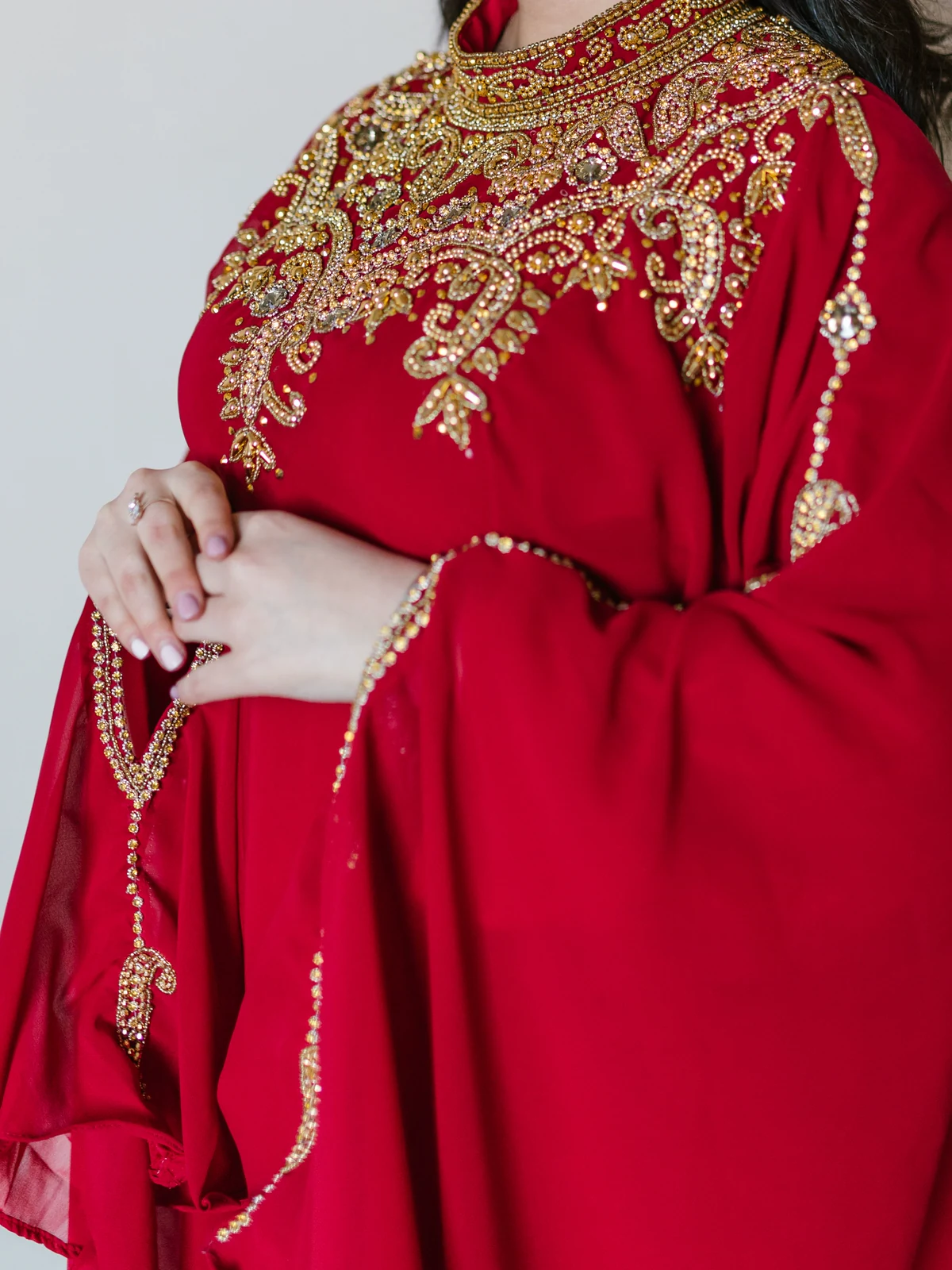
Loose, light and hoodless, the gandoura (also spelled gandora; ڭندورة or قندورة in Darija) is the outfit for hot days, Ramadan evenings and family gatherings. Embroidered and cut from a fine fabric, it is also worn for a henna night or Eid.
This guide helps you recognise it, tell it apart from the djellaba and the caftan, choose its fabric and size, and check the finishing before you buy or rent.
What is a Moroccan gandoura?
A gandoura is a long, straight dress, more or less loose, with no hood. Its sleeves can be short, elbow-length or very wide; the neckline — round, V-shaped or slit a few centimetres down the front — is often edged with sfifa (a braided trim) or embroidery. You put it on over your head: unlike a caftan, it has no row of buttons running down the whole front.
The word and the garment exist across North Africa, in similar cuts. In Morocco the gandoura is first of all an indoor, hot-weather garment: worn at home, in summer, during Ramadan, when receiving family or unwinding after a long day. That does not make it careless clothing: a well-cut gandoura in a good fabric is worn with the same pride as a djellaba.
Over the years the gandoura has also found its way into celebrations. Embroidered with gold thread, trimmed with randa lace or beads, cut from crepe or satin, it becomes an outfit for a henna night, a family evening or Eid — lighter and easier to wear than a ceremonial caftan.
Gandoura, djellaba or caftan: the real differences
All three garments are long and loose, which is why they are often confused. A few markers are enough to tell them apart.
| Gandoura | Djellaba | Caftan | |
|---|---|---|---|
| Hood | No | Yes (the qob) | No |
| Sleeves | Short, elbow-length or wide | Long | Long, often flared |
| Closure | Pulled on over the head | Buttoned neckline | Aakad buttons down the front |
| Use | Home, summer, Ramadan, family | Everyday, going out, Eid | Ceremonies, weddings |
| Weight | Light | Medium to warm | Varies, usually dressy |
The djellaba is worn to go out, over your clothes; its hood and long sleeves make it more covering and warmer. The caftan is the ceremonial gown: closed with aakad buttons, often belted with a mdamma, it calls for rich fabrics and detailed embroidery. The gandoura puts comfort first. It is the easiest of the three to wear for hours, at home or at a family celebration.
In practice many women combine them: an embroidered gandoura to receive guests at home on Eid, a djellaba for prayers or visits, and a caftan for next month’s wedding.
The main types of gandoura
The beldi gandoura keeps traditional cuts and finishes: a round or slit neckline edged with sfifa, tone-on-tone embroidery around the collar and sleeves, and a matte, fluid fabric. It is the most sought-after for Eid, family visits and Ramadan evenings, usually in clear but deep colours: green, burgundy, midnight blue, mustard.
The summer gandoura is all about staying cool: cotton, linen, viscose or voile, very loose cuts, short or wide sleeves and light colours. It is worn every day, at home or for a casual outing, and is the best companion in strong heat, especially inland.
The festive gandoura borrows the caftan’s fabrics and ornaments: crepe, satin, lined chiffon, gold-thread embroidery, randa (needle lace), beads or sequins. For a henna night, a family evening or a small engagement party, it can easily stand in for a light caftan.
The modern gandoura, finally, plays with the codes: asymmetric cuts, butterfly sleeves, thin belts, prints and mixed fabrics. It appeals to women who want a Moroccan outfit without the formality of the caftan.
Which fabric should you choose?
Fabric decides everything: comfort, drape, how the gandoura survives washing and how it looks overall.
For summer and everyday wear, choose a fabric that breathes. Cotton is soft, sturdy and easy to wash; linen stays cool even in the strongest heat but creases; viscose drapes beautifully and looks fluid; voile and cotton gauze are very light but sometimes see-through. Avoid thick synthetics, which trap heat and show perspiration.
For an occasion, crepe is a safe choice: it hangs well, barely creases and shows off embroidery. Satin catches the light but shows creases and marks; chiffon needs a lining. Velvet, for winter evenings, is rarer for a gandoura but does exist.
Whatever you choose, look at the piece in daylight to judge how sheer it is, and ask for the exact composition: a fabric sold as “silk” may be a synthetic satin, which changes both care and comfort.
Embroidery and finishing: what makes a good gandoura
A simple gandoura does not forgive sloppy finishing: there are fewer ornaments to distract the eye. Take the time to look at a few details.
The sfifa should be even, well sewn and free of loose threads. It usually edges the neckline and the front slit, and sometimes the sleeves. Hand-made sfifa shows slight natural irregularities and a dense weave.
The embroidery — silk thread, gold thread or tone-on-tone — should lie flat, without puckering around the motif. Turn the piece inside out: careful embroidery is clean on the back too, without loose knots.
The neckline should not gape when you lean forward; a small facing inside helps it stay in place. Inside seams should be overlocked or enclosed, especially on fabrics that fray, such as linen or viscose.
Finally, the hem should fall straight, without waves. These details show after a few washes: a well-finished gandoura keeps its shape for years, a careless one loses it in its first season.
Getting the size and cut right
A gandoura is worn loose, but “loose” does not mean “too big”. The first thing to check is the shoulder: the seam should sit roughly where your shoulder is, or the dress slides and the neckline opens. Kimono or butterfly-sleeve gandouras are the exception, since the shoulder is part of the sleeve.
Then check the length. Most gandouras stop at the ankle; too long and it drags and wears out, too short and it loses its line. Try it with the shoes or babouches you will wear.
Raise your arms, sit down, lean forward: the sleeve openings should not reveal more than you want, and the neckline should stay in place. If you like a more fitted look, a thin belt can define the waist without any alteration.
If you hesitate between two sizes, ask the boutique for the measurements of the finished piece (chest width, length, sleeve opening) instead of relying on the label, and compare them with a gandoura you already enjoy wearing.
How to wear a gandoura for each occasion
At home and every day, the gandoura stands on its own: cotton or viscose, light colours, babouches. It is the outfit for long summer days and Ramadan evenings, when you host the iftar or stay up with family.
For Eid, choose an embroidered beldi gandoura in a finer fabric. Many women wear it to receive guests at home and slip a djellaba over it to go out or to prayers.
For a henna night or a family evening, go for a festive gandoura: green and gold for henna, deep colours for the evening, gold embroidery or randa, with a little jewellery and a thin belt.
For a wedding, a gandoura suits the more relaxed moments (preparations, the day after, family time). For the ceremony itself, a caftan or a takchita remains the custom.
Whatever the occasion, a gandoura looks best with simple accessories: its clean cut shows off a beautiful piece of jewellery, a scarf or embroidered babouches.
Should you buy or rent a gandoura?
For an everyday gandoura, buying is the obvious choice: you will wear it often, wash it regularly and make it your own. Its price depends on the fabric, the amount of embroidery and the handwork; compare listings and their close-up photos rather than the headline price alone.
For a heavily worked festive gandoura that you will only wear once or twice, renting is worth comparing, as with a caftan. Some boutiques offer their pieces both for sale and for rent; each listing says which. Before renting, ask about the deposit, the minimum duration and what happens if the piece gets stained.
Either way, trying it on is the best way to decide. On Caftanio you can book a free fitting in store, then complete the purchase or rental directly with the boutique. Our guide should you rent or buy? walks through the maths for ceremonial outfits.
Caring for your gandoura so it lasts
A cotton or linen gandoura can be machine-washed at 30 °C, inside out, on a gentle cycle. Dry it flat or on a wide hanger in the shade: direct sun fades bright colours and yellows light fabrics. Iron it while slightly damp, always on the reverse.
An embroidered or beaded gandoura needs more care. Wash it by hand in cold water without rubbing the embroidery, or take it to a dry cleaner if the ornaments are fragile. Never iron directly on the sfifa, beads or sequins: put a cloth between the iron and the piece.
When storing, avoid thin hangers that mark the shoulders, and keep festive gandouras in a breathable fabric cover. A well-kept gandoura holds its drape and colours for years.
Where to find a Moroccan gandoura
Boutiques on Caftanio publish their gandouras with sizes, prices and photos of each piece; similar styles can also be found among the djellabas and sets. Filter by city to find a boutique near you, browse the boutique directory, book a fitting, then buy or rent directly from the boutique.
For a broader look at the cuts and fabrics of Moroccan outfits, read our guide to choosing your caftan, jellaba or gandoura and our tips to prepare your fitting.
Frequently asked questions about the gandoura
Gandoura or gandora: which spelling?
Both are correct and name the same garment. In Darija it is written ڭندورة or قندورة, and you will also hear “gondoura”.
Can you wear a gandoura for Eid?
Yes. Many women wear an embroidered beldi gandoura at home on Eid and put on a djellaba to go out.
Is a gandoura worn with a belt?
Not necessarily. A thin belt or a light mdamma can define the waist of a festive gandoura; summer gandouras are usually worn loose.
Gandoura or djellaba for summer?
The gandoura, hoodless and often short-sleeved, is cooler. A summer djellaba in linen or light crepe remains a good option for going out.
How do you care for an embroidered gandoura?
By hand in cold water, or at the dry cleaner if the embroidery is delicate. Never iron directly on the sfifa and beads.