
Choosing a caftan, jellaba or gandoura in Morocco
Compare caftans, jellabas and gandouras for weddings and celebrations: fit, fabric, budget, and what to check before buying or renting.
Caftanio editorial team ·
Last updated:
Begin with the celebration and the way you will wear the outfit
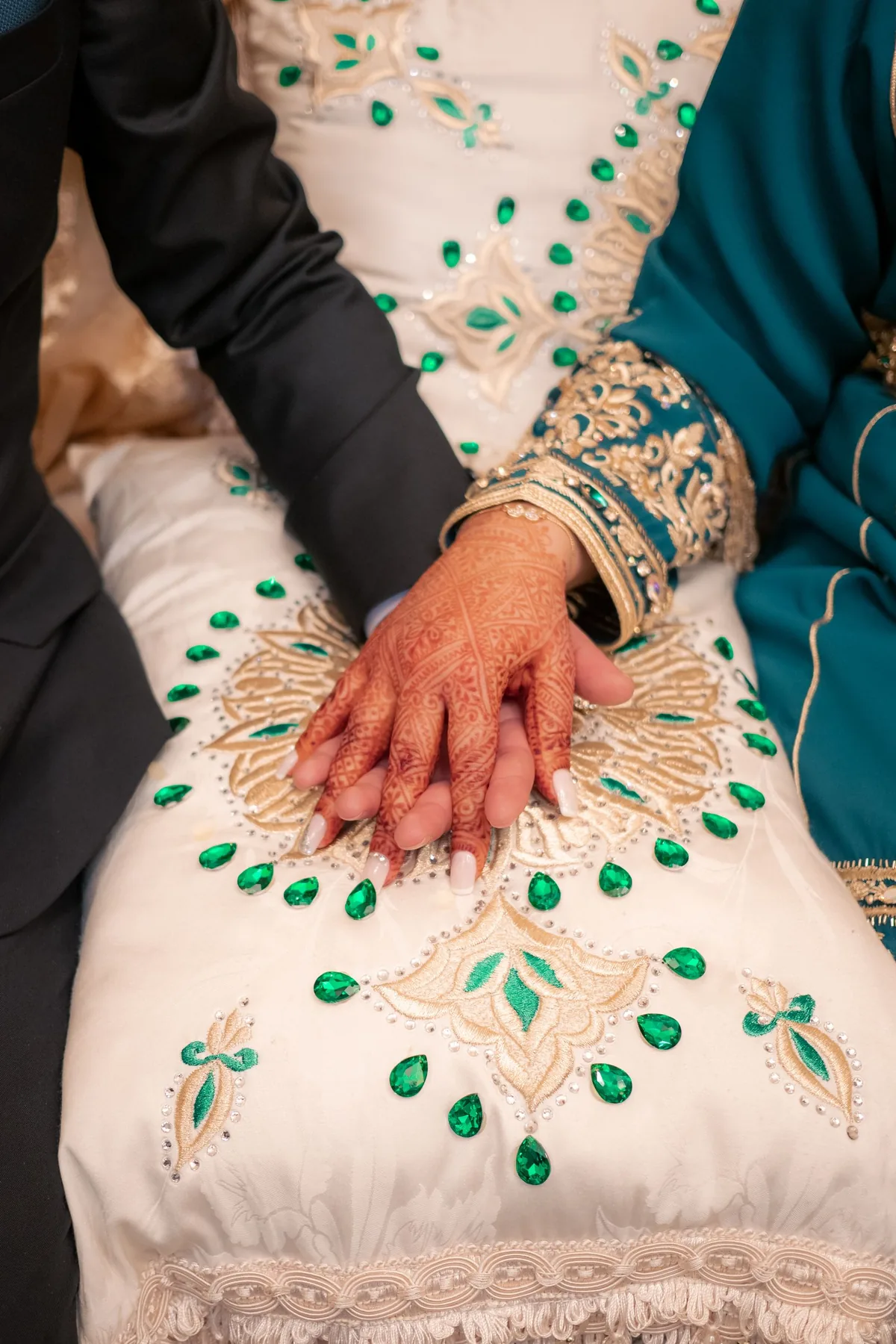
Choosing a Moroccan caftan starts with the day you are planning. A wedding reception, an engagement, a henna evening and a family lunch can involve different settings, temperatures and expectations. Before browsing, write down the event date, venue, approximate duration and any guidance from your host. Include the less glamorous parts of the day: travelling, climbing stairs, standing for photographs and sitting through dinner. These details help you choose a garment that remains comfortable after the first photograph.
Decide how dressed up you want to feel, rather than assuming every celebration requires the heaviest embroidery. A simple caftan with careful finishing may suit your plans better than a highly embellished outfit. A jellaba or gandoura can also be worth considering when the occasion and your personal style allow it. There is no useful rule that replaces the host's guidance or your own comfort.
Finally, identify your priorities. You might value freedom of movement, coverage, a particular colour or an outfit you can wear again. Keep three requirements and two preferences on your shortlist. This gives a boutique something concrete to work with and helps you compare attractive listings without losing sight of your actual needs.
Understand caftans, takchitas, jellabas and gandouras
Garment names are useful starting points, but the construction of the actual piece matters more than its label. A Moroccan caftan is generally a long garment with decorative finishing that may be worn with a belt. A takchita commonly involves layered pieces. When considering one, ask exactly which layers are included, how they fasten and whether they are intended to be worn together. Boutique descriptions and contemporary designs can vary, so confirm the details rather than relying on a name alone.
A jellaba, also spelled djellaba, is usually recognised by its hood and long silhouette. Some versions are designed for everyday wear, while others have dressier fabrics or decoration. A gandoura often offers a relaxed shape, with sleeves and finishing that differ between designs. Neither category tells you automatically how formal, transparent or comfortable a particular garment will be.
If you are searching for caftans for sale, jellabas to buy or a gandoura to rent, compare photographs showing the front, back and details. Ask for clarification when a listing uses several garment names. A photograph of a layered outfit does not establish that every visible piece is included. Understanding the construction now avoids discovering a missing underlayer or belt when you collect the outfit.
Compare fabric, lining and workmanship in person
Begin with the fabric's behaviour rather than its name. Ask the boutique about fibre composition, lining and care instructions. Terms describing a finish or weave do not necessarily identify the fibre. Hold the garment, where permitted, and notice whether it feels soft, stiff, heavy or slippery. Consider the complete outfit: several thin layers can still feel warm, and a light outer fabric may need a substantial lining to provide the coverage you want.
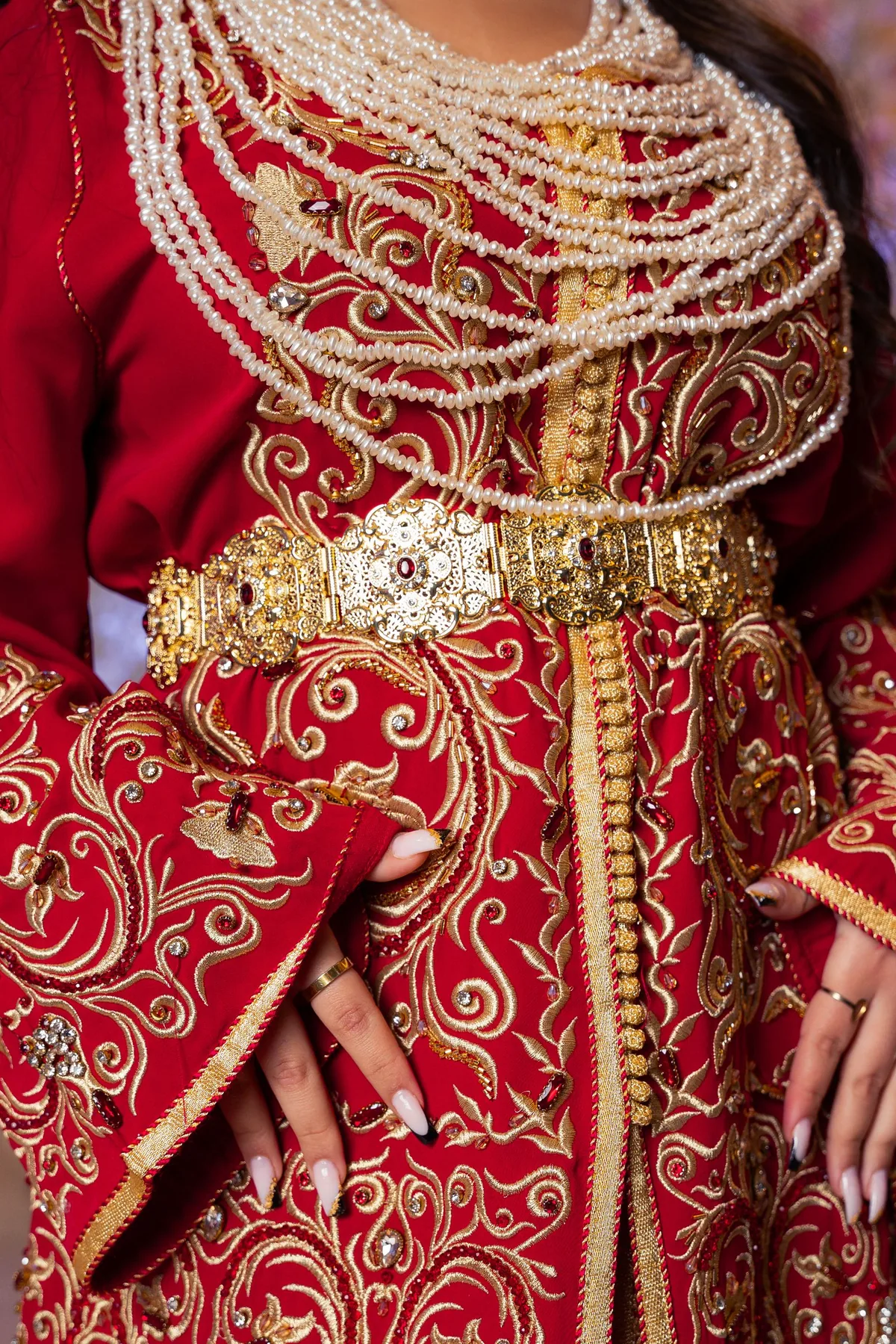
Look at the finishing around the neckline, cuffs, front edges and hem. Decorative braid, embroidery and buttons should feel secure without pulling the surrounding cloth into unwanted folds. Check the inside for rough areas that might rub your skin. If a seller describes a piece as handmade, ask which elements were made by hand. Detailed workmanship can add interest, but a broad description should not replace a careful inspection of the garment itself.
For a summer celebration, test comfort with the intended underlayers rather than choosing only by fabric weight. For cooler evenings, consider your journey between the venue and transport. Inspect transparency against light with the boutique's permission. The aim is to understand how the caftan, jellaba or gandoura performs in your situation, without assuming one fabric is always the right answer.
Choose a fit that supports movement and your preferred silhouette
A size label cannot describe the whole fit of a traditional outfit. Ask for the garment's bust, hip, shoulder, sleeve and full length measurements, and clarify whether these are measurements of the body or of the finished garment. Leave room for movement and any intended underlayers. If the boutique provides a waist measurement, ask how the belt changes the silhouette and whether the design is meant to remain loose elsewhere.
At the fitting, check the shoulders before focusing on the waist. Walk, sit down, reach forward and raise your arms gently. Watch whether the neckline shifts or the front opening separates in a way you dislike. A garment that looks smooth while you stand still may feel restrictive during dinner or dancing. Tell the fitter what you notice; discomfort is useful information, not something you need to tolerate to justify a favourite design.
Wear shoes close to your planned heel height when checking length. The hem should work for the route you will actually take, including stairs and uneven ground. Ask which alterations are possible, who would carry them out and when. Rental pieces may allow only limited reversible changes. Do not assume a caftan for rent can be altered as freely as one offered for sale.
Build a colour and accessory combination you can maintain
Start with a colour you enjoy wearing and consider how it looks in the lighting you expect. Boutique lighting, daylight and a phone screen can show the same cloth differently. If photographs are allowed, take a full length view and a closer view without filters. Use them as a memory aid, while recognising that a photograph cannot guarantee an exact colour match. Ask the host about any specific dress guidance before treating a colour as automatically suitable.
Choose accessories after you understand the neckline, sleeves and belt. Strong embroidery may need very little additional decoration. Check that a bracelet cannot easily catch on cuffs and that a bag strap will not rub heavily against delicate work. Try sitting with the intended belt and shoes. An attractive combination should allow you to breathe, move and manage the practical parts of the evening.
Confirm which accessories belong to the offer. A photographed belt, jewellery set, pair of shoes or headpiece may be styling rather than part of the sale or rental. If the belt is separate, include its cost in your comparison. For a layered takchita, ask whether each layer and its fastening is supplied. Keeping the outfit coherent often depends more on these small confirmations than on adding more pieces.
Decide whether buying or renting fits this particular garment
Buying a caftan can make sense when you expect to wear it repeatedly, want lasting alterations or wish to keep it. Renting a caftan can suit a single celebration or a style you do not expect to repeat. Apply the same reasoning to jellabas and gandouras, while checking whether the boutique actually offers the garment in your preferred mode. A product being available for purchase does not mean a rental option exists.
Compare the complete expense rather than the headline price. For a purchase, ask about alterations, accessories, cleaning and suitable storage. For a rental, clarify the charged period, cleaning arrangements, collection and return journeys, and any refundable deposit. Keep a refundable deposit separate from the rental cost when planning your budget, because you may still need that money available until the boutique returns it under the agreed conditions.
Do not treat renting as automatically cheaper or buying as automatically better value. A practical jellaba used regularly and an elaborate wedding caftan worn once solve different needs. Shortlist garments suitable for the same occasion and compare offers on the same basis. If you want a more detailed decision framework, continue with the journal guide about renting or buying before confirming your choice.
Use the caftan rental-versus-purchase guide to compare the full costs and practical conditions offered by your chosen boutique.
Search locally and ask questions that produce useful answers
Use Caftanio to discover garments and boutiques, then narrow your search around your city, size, budget and intended use. Phrases such as caftan rental in Casablanca or caftans for sale in Rabat can describe your goal, but a matching listing still needs checking. The same applies when looking for jellabas for sale in Marrakech or a gandoura to rent in Fès: location words help you search and do not establish that a particular size or date is available.
Send a concise enquiry with the listing reference, event date, desired rental period or purchase intention, and your main fit requirements. Ask whether the pictured piece is the exact garment you would try and collect. If a boutique has several branches, confirm which address holds it. A nearby shop is useful only if the correct piece and the right person are available when you visit.
A request is not a confirmed rental, and a fitting appointment is not automatically a reservation of the garment. Ask the boutique to confirm the exact piece, size, dates and agreed terms. Caftanio supports discovery and contact; the boutique handles garment payment, collection and returns. Keep the confirmation so that your shortlist becomes a clear arrangement rather than an informal assumption.
Start with caftans offered by boutiques, then explore the city directory and boutique directory to plan a visit near you.
Make your final choice with a practical checklist
Before deciding, compare your finalists against the priorities you wrote at the start. Which garment fits comfortably? Which suits the venue and your preferred level of formality? Which has a clear total price and workable collection arrangements? If two pieces look equally appealing, a better fit or easier return journey can be a sensible reason to choose one. Avoid letting an attractive photograph outweigh an unresolved practical problem.
Ask for a written summary identifying the garment, size, included accessories, agreed price and any alterations. For a rental, add collection and return times, cleaning instructions and deposit conditions. For a purchase, clarify the condition of the piece and any exchange or alteration terms offered by the boutique. Read the summary while you can still ask questions, rather than waiting until the day of the celebration.
Can a jellaba replace a caftan? Sometimes, depending on the actual design and the occasion; ask your host when expectations are unclear. Is the most elaborate outfit the best choice? Only if you enjoy wearing it and it meets your needs. A successful choice is a caftan, jellaba or gandoura you understand, can move in comfortably and can obtain under clearly agreed conditions. Start with relevant Caftanio listings and turn inspiration into a focused fitting shortlist.
Once you have a shortlist, use the caftan fitting checklist to prepare your shoes, questions and final checks.