
Your caftan, jellaba and gandoura fitting checklist
Prepare a boutique fitting for a caftan, jellaba or gandoura: measurements, movement checks, alterations, and details to confirm before renting or buying.
Caftanio editorial team ·
Last updated:
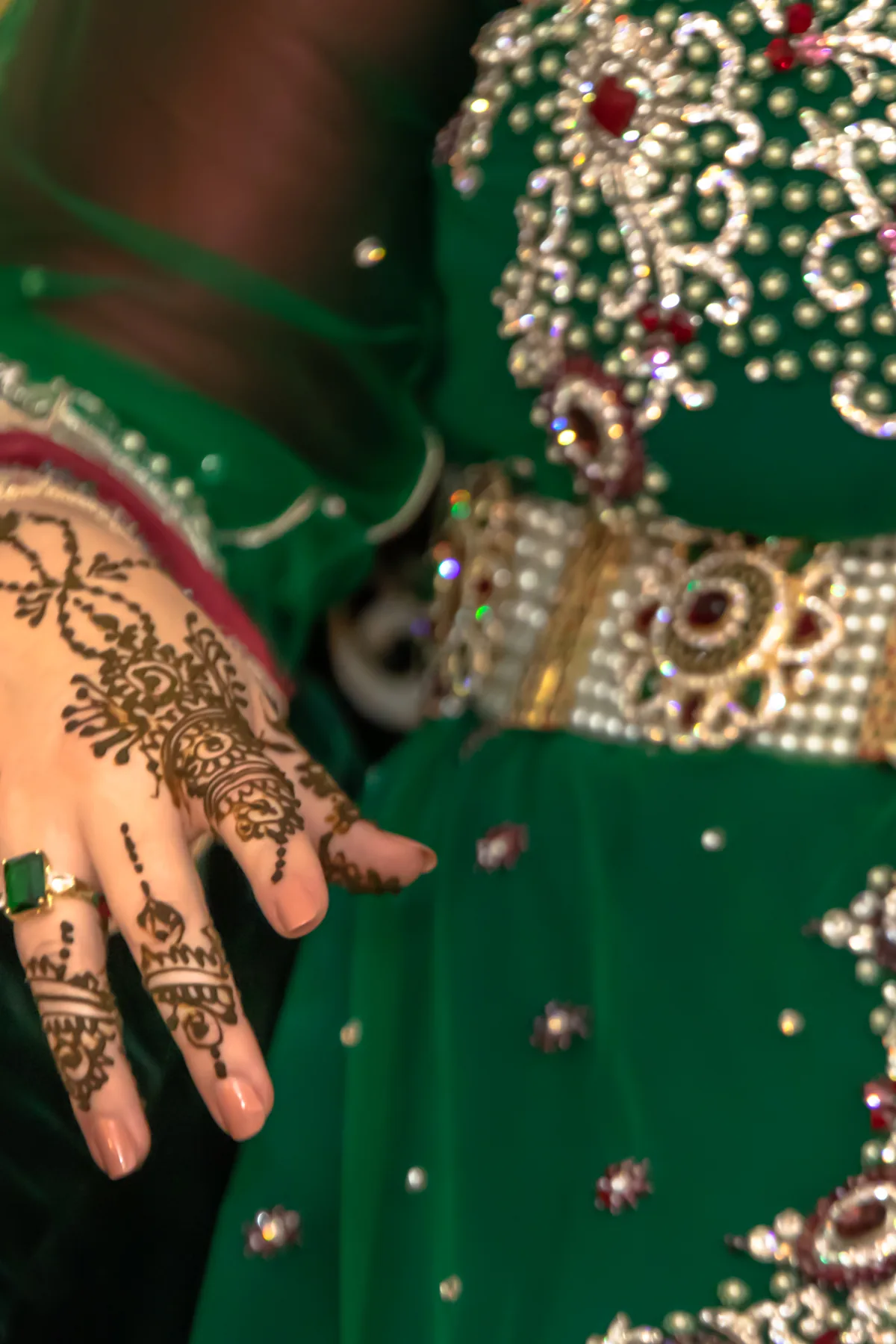
Set a clear brief before arranging the fitting
A useful boutique fitting begins before you arrive. Note the occasion, date, venue and how long you expect to wear the outfit. Decide whether you are looking to buy a caftan, rent a jellaba or compare several kinds of traditional clothing. If you are still open to different garments, say so. The boutique can prepare more relevant options when it understands your use rather than only a preferred colour.
Separate your garment budget from money needed for accessories, alterations and travel. If renting, plan for any required refundable deposit as well. Bring a short list of listing references from Caftanio and identify what attracts you to each: the neckline, relaxed cut, embroidery or sleeve shape. Three purposeful choices are often easier to compare than a large collection of unrelated photographs.
Ask which branch holds the pieces and whether the actual garments will be available to try. Confirm the appointment time, address and expected duration. Mention any access or mobility needs early so the boutique can explain its arrangements. A fitting appointment does not automatically reserve a garment for the celebration; its purpose and any separate rental or purchase confirmation should be clear before you travel.
If you are still comparing cuts and uses, start with the guide to choosing a caftan, jellaba or gandoura, then make a shortlist of pieces to try.
Bring the items that influence fit and length
Shoes change how a long garment falls, so bring the pair you intend to wear or one with a very similar height and shape. If you have not chosen shoes, tell the fitter rather than guessing a final hem length. A caftan adjusted for one heel height may behave differently with another. Bring any belt or underlayer that you already plan to use, provided the boutique is happy for you to try them with the garment.
Wear comfortable, simple clothing that is easy to change. Choose undergarments you expect to use at the event, since they can affect coverage and the way the fabric sits. You do not need to change your body to justify a garment; you need to understand whether the garment works for you. Tell the fitter if you prefer more room, a different neckline or an alternative sleeve.
Keep a small note of relevant measurements if the boutique has requested them, and clarify whether its size information describes the body or the finished piece. Bring the listing references and agreed quote so you can identify the correct outfit. A phone can help you record details, but ask permission before photographing garments or people. Good preparation reduces repeated changing and leaves more time to assess comfort.
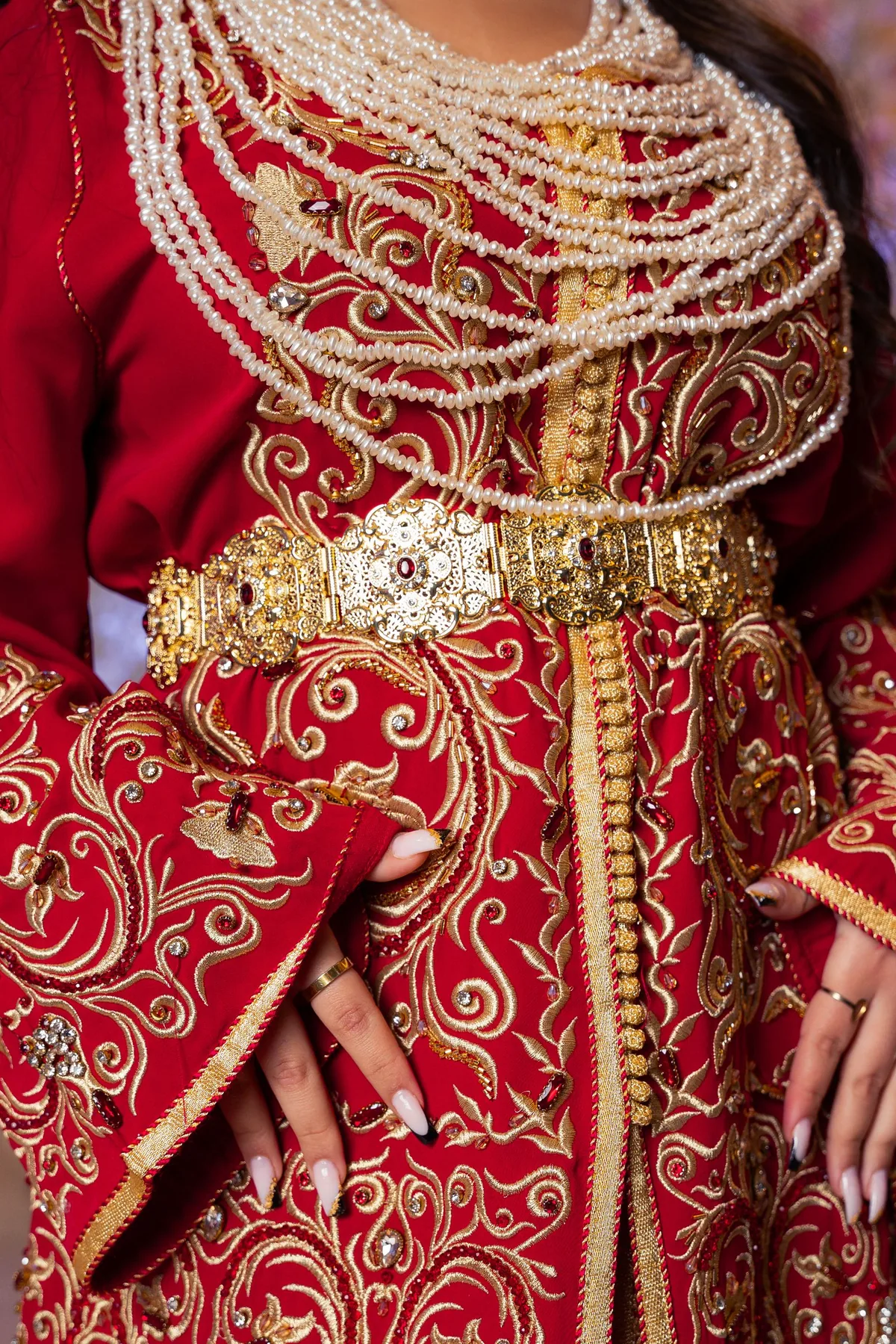
Check the silhouette before tightening the belt
Start by looking at how the garment hangs naturally. Check whether the shoulders sit comfortably and whether the fabric falls without unwanted pulling at the bust, hips or upper arms. Do this before a belt gathers the waist, because a belt can temporarily conceal a fit issue. Ask the fitter which features are intentional parts of the design and which might be adjusted.
For a caftan, examine the front edges and fastening as well as the neckline. For a layered takchita, try the layers together and confirm that each one is included in the offer. For a jellaba, consider the hood's weight and how the neckline sits when you turn your head. For a gandoura, check the width and arm opening: a relaxed shape still needs to give you the coverage and movement you want.
Then add the intended belt, if applicable. It should support the look without creating discomfort when you sit or breathe normally. Check the back and side view as well as the front. Ask for a mirror or the boutique's help rather than relying solely on a posed photograph. An outfit you like from every practical angle is easier to wear confidently throughout a long celebration.
Test everyday movements and the actual walking length
A fitting should include movement that resembles the occasion. Walk several steps, turn, sit down and stand up. Reach forward as if taking something from a table, then gently lift your arms. Notice whether the sleeve pulls, the neckline moves unexpectedly or the belt digs in. Tell the fitter exactly what happened. A specific observation is more useful than saying that the garment somehow feels wrong.
Check the hem with your intended shoes. Consider stairs, door thresholds and the route between the venue and your transport. A long line can look elegant, but you need a manageable way to move without repeatedly stepping on the fabric. Do not pin the hem or change its length yourself during a rental fitting; ask the boutique what adjustments it permits and who will perform them.
Spend a moment sitting as you might during dinner. Check whether embroidery or fastenings press against your skin, and whether your preferred coverage remains comfortable. If the event involves extended standing, keep the outfit on long enough to notice its weight. These checks do not predict every moment of the celebration, but they reveal problems that a quick look in the mirror can miss. Repeat them after any proposed alteration before accepting the final fit.
Inspect fabric, lining, fastenings and decoration together
Ask to inspect the garment in good light with a member of the boutique team. Look at the lining, seams, hem, neckline, cuffs and fastening. Check for loose threads, missing buttons, marks or decoration that could catch on jewellery. Small irregularities may be cosmetic, while a strained seam could affect wear. Ask the boutique to explain and record anything relevant rather than deciding from a distant photograph.
For a rental, agree on the condition of the exact item you will collect. If a different garment will be supplied, ask when you can inspect that piece. With permission, photographs can provide a useful record alongside written notes. Make sure any included belt or other accessory is checked too. An immaculate outer garment does not resolve a damaged fastening on a separately supplied component.
Ask about fibre composition and care instructions, especially where several fabrics or decorative materials are combined. Check transparency with your intended underlayers. Do not assume a familiar fabric name guarantees a particular level of coverage or a simple cleaning method. For a purchase, clarify whether the garment is new, a display piece or previously used if that matters to your decision. A careful shared inspection helps both sides understand what is being agreed.
Use the Moroccan caftan guide to familiarise yourself with fabrics and finishing before your visit.
Agree on alterations and schedule a final check
Once the fit is understood, ask the boutique to list the proposed adjustments precisely. Length, sleeve work, belt changes and alterations around the body may involve different constraints. Confirm who will do the work, what it costs and whether the garment must remain with the boutique. Avoid assuming that a casual suggestion during the fitting is already included in the quote.
A purchase may allow lasting adjustments, but the fitter should explain the limits of the construction. With a rental, get clear permission for any change and ask whether it must be reversible. If the desired adjustment is not allowed or cannot be completed in time, consider another piece. A beautiful garment that cannot reach a comfortable fit is an incomplete option, however appealing its photograph.
Agree on a completion date and, where needed, another fitting with the same shoes and underlayers. Allow room in your own schedule to respond if the result needs attention. Check the final garment again rather than assuming the original fitting proves the altered piece will work. If your event is close, state the date openly and ask what can realistically be delivered. A clear timetable is more useful than an optimistic promise that nobody has written down.
If a garment will be made from a reference rather than simply adjusted, the guide to tailoring a caftan from a photo explains what to agree with the tailor.
Confirm the purchase or rental details before leaving
For a purchase, confirm the exact garment reference, size, condition, included pieces and total agreed price. Ask about any alteration, exchange or return terms the boutique offers and keep the answer with your quote. Do not assume that a policy mentioned for one product also applies to a garment altered for you. If a term is unclear, ask for an explanation before confirming.
For a rental, add the collection and return times, the charged period, cleaning responsibility and the amount and conditions of the refundable deposit. Ask what happens if collection is delayed, an accessory is missing or the outfit is returned late. These are questions about the boutique's specific arrangement; policies can differ. Check that the return plan works with the event ending time and any travel the following day.
Caftanium helps you find relevant listings and boutiques, while garment payment, collection and return are arranged with the boutique. Submitting a request or attending a fitting does not automatically confirm a rental. Ask for confirmation covering the exact piece, size, dates and branch. Keep the written summary and contact details somewhere easy to retrieve. That record is more useful on collection day than trying to remember a conversation from several weeks earlier.
Before confirming the terms, revisit the rental-versus-purchase cost comparison and the listings of caftans to rent or caftans to buy.
Leave with a simple collection and event plan
Before leaving, review the outfit as a complete set. Do you have the right shoes, any required underlayer and the agreed belt? Is the collection address correct, and who will attend if you cannot? Ask the boutique what information it needs from the person collecting. If renting, decide how the garment will travel back and who is responsible for returning every included component.
Ask how to transport and store the piece before the occasion. Follow the boutique's care instructions; do not steam delicate decoration or treat a mark without checking. At collection, verify the reference, condition, included items and final fit again where practical. A fitting provides a valuable starting point, but the garment handed over should still match the arrangement you confirmed.
What if the outfit still feels uncomfortable? Describe the problem and compare alternatives before committing. What if the exact piece is unavailable? Review any replacement on its own measurements, condition and terms. Must you decide during the first visit? Ask how long the quote or proposed availability remains valid rather than guessing. A good fitting ends with either a confident choice or clear next steps. Use your Caftanio shortlist to prepare the visit, then let comfort, workmanship and a documented arrangement guide your final decision.
Use the caftan boutique directory to find the seller’s storefront and contact details and arrange collection directly.